At the risk of seeming like the Telegraph’s Obit Dept, I present this piece by David Williams on photographer and friend Steve Bent. Dunno about you, but I’m getting a little tired of all the good guys leaving us all of a sudden. You’d have liked Benty, a great snapper, great company and silly sod. Anyway, maybe it’s all a part of getting old – your friends keep leaving you all of a sudden- but I don’t like it.
After a battle against illness, Steve died on Christmas Day, aged 53. Give yourself a little time to read and enjoy this: one mate of mine writing about another.
Steve Bent was among the most admired, respected and loved photographers in Fleet Street. His devoted compassion for his cameras’ subjects – be they victims of war, mutation, famine, disease or simple mindless cruelty – knew no bounds.
He had a journalistic mind so sharp, says his great friend and colleague Richard Holliday, that it was as if he slept in the proverbial knife drawer every night.

Occasionally, he could be taken by surprise. Arriving in war-torn Beirut for the first time with fellow snapper Tom Stoddart and Mail on Sunday hack Holliday, the trio were cornered in a bar by Lebanese freelance photographer Lena Kara.
“What’s happening?” asked an alarmed Steve. Kara blew him a kiss and said “I’m taking your pictures so that when they kidnap you or execute you I can make lots of money from London.”
Together they did – as a trio – four trips to Beirut, which is where Steve met his beautiful wife-to-be, Reuters journalist Hala Jaber, married her and brought her back to London, where she has won a host of foreign correspondent awards on the Sunday Times.
One memory Stoddart and Holliday have of Beirut is of the mad Mancunian Bent dragging them up to the top floor of a shelled apartment block. The blown-out window of that block was connected to the adjacent building by a rotting plank of wood. Bent was halfway across. Stoddart and Holliday looked at each other and shook their heads. Stoddart – who’d worked with Bent at John Pick’s York agency – enquired, as only Geordies can (when they’re being soft), “Are you being a twat, pet?”
On the second tour of Beirut, the three attempted to smuggle themselves into a Palestinian refugee camp where the aptly-named British surgeon Dr Pauline Cutting was working around the clock in atrocious conditions. Sporting t-shirts with ‘British press – don’t shoot’ in English and Arabic on front and back, Bent was enraged when a shot rang out. “Can’t you f***ing read?” he bellowed. There was no reply.
Later, during the Balkan War, Bent and Holliday were attached to the Armija Bosnia-Herzegovenia, camped in tents on the summit of Mount Igman, one of the venues for the 1984 Winter Olympics. It was a classic Hammer Horror moment when, encased in sleeping bags in a tiny ridge tent during a Transylvanian storm, Bent hissed at his colleague, “Don’t move quickly, but there’s a giant rat nibbling at my b***ocks. You’ve got the torch – deal with it, mate!” Holliday switched on the light to focus on a tiny kitten pawing Bent’s groin.
It had been in a graveyard overlooking Sarajevo that Bent had handed the Daily Mail’s David Williams four plastic film containers, pressing them into his hand with the warning “guard these with your life, Willy…”
Dutifully, he hid them in three different parts of their Lada Niva they were using. The fourth was gaffer-taped under the arm of Jano, the fixer, at Steve’s suggestion.
That night in near darkness back at the Holiday Inn, he began to develop his films and took back the containers, placing each side by side on the wooden table beside the bed. Two he opened, taking out the precious film that would later make a spread for the Mail on Sunday.
He then threw the one with gaffer-tape at Williams with the words “that’s for you”, his eyes dancing mischievously. They opened the containers at the same time, inside were two miniatures of brandy. He simply raised an eyebrow and drank. “The armpit kept it at the right temperature,” Steve explained.
It was typical of Bent’s generosity and sense of humour which stayed with him to the end although happily his favourite trick of twisting a man’s nipples and then pulling out a chest hair, pretending to add it to his head stopped several years ago.

These were just a few of the many stories about Bent repeated by friends in the days since his sad, premature, dignified death from cancer at the age of 53 on Christmas Day at his South London, home.
For a man who so loved to travel in his professional life, he was desperately difficult to move when back home in UK refusing to budge from what became known to Benty’s friends as the “Club House” – the locals where he could always be found.
In Maida Vale, it was the Warwick Castle (when he left for what he used to term the “Badlands” south of the Thames, he took the pub sign with him – it still hangs in the garden), in Fleet Street, The Harrow and for more than a decade in Clapham, the Tim Bobbin or the Rose and Crown. It was not Hala or friends who could occasionally make Steve vary venues but only a change of brand of lager by a foolish landlord.
Those years of selfless saloon bar research paid dividends, bemused but grateful colleagues recall, when despite the Shock and Awe over Baghdad, Steve was uniquely always able to find beer and, even more impressively, a constant supply of good French wine.
It was in the basement of Baghdad’s hotels that Steve became known as ‘Stirred, never shaken’ after revealing his hand at mixing a mean Martini, playing host to colleagues entertained by Sinatra tunes.
It had been in Maida Vale’s Elgin Avenue that Steve had first found shelter on arrival in London early in the 1980s, sharing a one bedroomed flat with his colleague David O’Neill. It became known as the “Pig Pen”, Benty’s bed a mattress on the flood among his clutter, the sofa propped-up by bricks.
When in 2004 he had been smuggled into the besieged city of Falluja to cover the American offensive – his blond hair and moustache were died dark brown and he wore traditional dishdasha robes – he mused it had been the years in the squalor of Elgin Avenue that had prepared him for the journey among the rubbish concealed in the boot of the car travelling through Al Qaeda and fundamentalist controlled frontlines.
His infamous negative library had begun in Elgin Avenue … compromising photos of friends and colleagues on the town or ‘at play’ on jobs which he would ‘ping’ by email years later into the inbox of an unsuspecting mate with a message saying ‘how much ?’ or ‘mmmm’. One he particularly enjoyed was of an attractive young reporter, who rose to fame as a TV anchor. In West Africa, he had taken a picture of a monkey passionately clutching her leg at the precise moment of the animal’s over-excitement. Whether her expletives were directed at Bent or the monkey are unclear.
On another trip – to Algeria to cover a terrorist plane hijack – Bent was checking in for his Swissair flight home via Zurich. When the check-in clerk demanded to know if he could prove he hadn’t bought his state-of-the-art photo transmitter in a back-street market in Algiers, Bent finally lost his cool and demanded the man fetch his superior. Once the wretched clerk was out of sight, Bent reached across the desk, tacked a Swissair flight tag to the transmitter, pressed the button and off it happily went, bound for the aircraft.
When the clerk returned with his supervisor to demand where ‘the thing’ had gone, Bent turned in all innocence to the supervisor and said “I really have no idea what this idiot is talking about”.
Later – and still riled after they had boarded the plane – Bent and Holliday were thrilled to be joined at the last moment by a noisy pompous German in the row immediately ahead. Turning to them, he demanded “Please put out those cigarettes. Smoke upsets me.” Bent pointed out that the man was seated in the smoking section of the plane. The German replied he had arrived late at the airport and “I had no choice, I had no choice.” “Mmmm, bit like Poland in 1939 then”, came the killer put-down from Steve.
Bent had always wanted to work in Fleet Street and enjoyed telling a story about how, as an ambitious but inexperienced young man, he once “door-stepped” his hero, the award winning photographer Don McCullin, and asked for advice. McCullin told Bent to aim for the big stories, and to remember that the biggest stories were often in hard to reach places.
Steve followed that advice, spending five months in Afghanistan following the Soviet invasion and then smuggling himself into the Polish shipyards in the back of a lorry – he would later joke he had pioneered the asylum seeker trail – to bring back pictures that brought him to the notice of the Mail on Sunday where he became one of their first staff photographers.
It was an environment, an adventure in which Bent thrived. What he termed ‘boutique trips’ to cities like New York or Paris would be turned down for the world’s trouble spots. It was there that he thrived producing three decades of outstanding images, building lasting contacts and being at the heart of campaigns that raised huge sums for the subjects of his photographs.
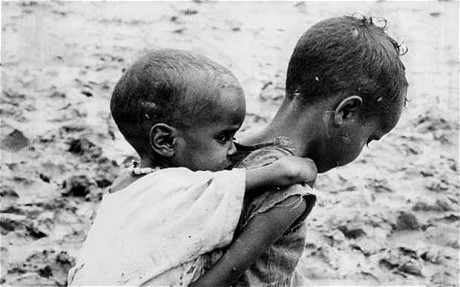
He was especially proud of his early work in Ethiopia where his pictures of the famine, and in particular suffering of children, set the mark for his work in future years.
For many, many months in Iraq, he and Hala braved the huge dangers – and obvious hardships – to bring an untold story to the world. As with many top photographers, his news sense was as good as most reporters and his judgement of a situation better than most. His calming influence and protective presence allowed Hala to work at her brilliant best.
Inevitably, their work and contacts made enemies too and they became the targets. On one occasion, they received a reliable tip they were about to be kidnapped, tortured and executed and Bent with his contacts built among former UK military now working in security orchestrated their escape, first along what at the time was the most dangerous drive in the world to Baghdad airport and then on to the plane.
An email marked “Urgent…for your eyes only” had alerted Williams to their plight. It read : “fyi dave we have to move asap – Hala’s phone is working –
Don’t worry we are in safe hands. Will ring asap…” That night Steve called from a secure compound in the Iraqi capital. Williams asked : “Are you OK ?” There was a long silence, “No,” said Steve, pausing again to build-up the tension “….there’s no alcohol in the beer.”
The pair made their last trip to Baghdad in 2009 where Bent’s harrowing, moving pictures contributed massively to The Sunday Times Christmas appeal, in aid of Iraqi children horrifically wounded in the war; it has since raised more than £1 million.
He and Hala built relationships with many of their subjects. When a girl called Shams Kareem was blinded by a bomb blast that killed her mother, Steve’s pictures brought home her story to the readers, who responded by donating £140,000 that brought her to London for treatment. Steve and Hala have helped support her ever since. She is one of several they met in Iraq they, unseen and unheralded, continued to help.
Even in the final year, unable to eat, and fed through a tube in his nose, Bent was often at his most animated when following international stories, especially where Hala was involved in Libya and Syria. Crouched on the sofa, cigarette burning beside him, he would scribble notes to be relayed to Hala together with snippets from agency reports he demanded from colleagues. When told he was like a Foreign Editor, his eyes danced – as they did to the end when all else was failing – and muttered his well known view of armchair generals.
Those blue-eyes would have been ‘dancing’ too a few days after his death at the success of a longstanding prank that had led to the fact that Geoff Bent, among the Manchester United players to have died in the 1958 Munich air disaster, was an uncle had appeared in an obit. That alleged relationship had been an often repeated wind-up of Holliday so he believed it to be true…typical.
Steve Bent was one of the most travelled snappers in Fleet Street’s history. With the exception of South America, there was hardly a country that his trademark Desert boots had not left their imprint on.
His friends around the globe will mourn his passing very, very, very deeply – as will the orphaned children that his desperately moving photos raised so much money for.
David Williams
Chief Reporter
Daily Mail





 The Sharp Single